Incontinence & skin care
Adult Diapers
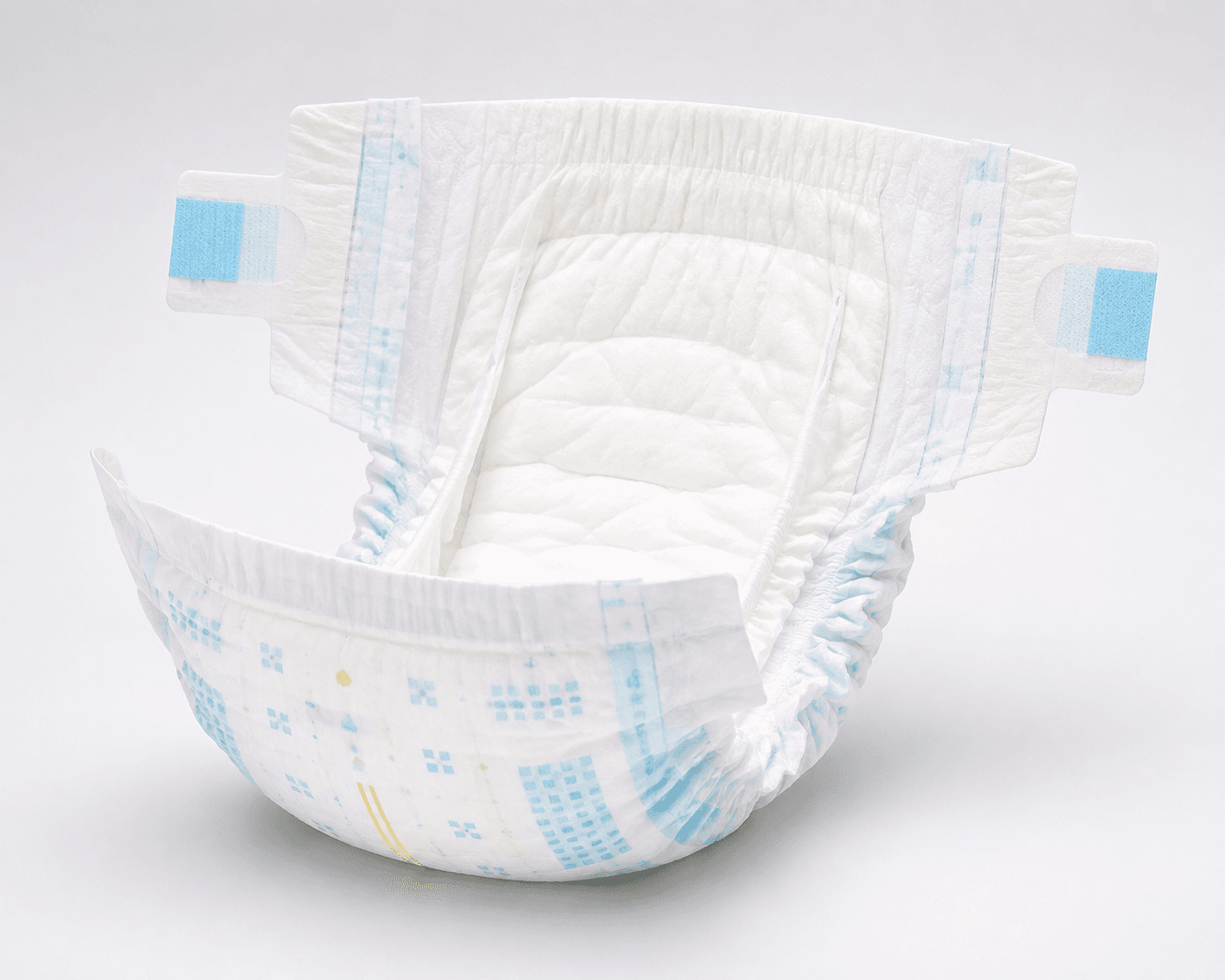
Tape-style and pull-up adult diapers with absorbent core and leak guards, in M/L/XL — sized by waist, not by body weight.
Also searched as: adult nappy · incontinence pads · bade logo ka diaper
This is a clinical item. Read the safety information below before use. If nobody in the household has been trained, tell us when you order and we will arrange a nurse rather than leave you to it.
Get the best quote
Consumables are quoted by size and quantity, and it is usually cheaper per unit to set up a standing reorder than to buy pack by pack. Tell us the situation and we will work the sizes out with you.
Quotes state GST separately at the applicable rate.
What it is for
Adult diapers are usually the first thing families buy and the thing that most often gets sized wrongly. Sizing is by waist or hip measurement, not body weight — a thin patient with a large abdomen needs a bigger size than their weight suggests. The other common mistake is trusting absorbency: a highly absorbent product holds more urine against the skin for longer, and prolonged contact with urine or stool causes a chemical injury to the skin that precedes most pressure ulcers in incontinent patients. Change on soiling, not on a schedule.
Sizes & variants
- Types
- Tape-style (for bedbound patients) or pull-up (for mobile patients)
- Sizes
- M (71–115 cm waist), L (89–140 cm), XL (110–160 cm)Measure the waist or hips. Body weight is a poor guide.
- Absorbency
- Day and overnight variants
- Features
- Leak guards, wetness indicator, breathable back sheet
- Packing
- Packs of 10, 15 and 30
How to use it properly
- Measure the waist to size, and fit so the leg cuffs sit in the groin crease without gapping.
- Lower tapes first at the hips, upper tapes angled upward.
- Roll the patient to change rather than dragging — dragging tears fragile skin.
- Wash and dry the skin at every change; apply a barrier cream on intact skin only.
- Change as soon as soiled, regardless of how much the product claims to hold.
Also know about
- More absorbent is not more protective
- Higher absorbency means urine sits against the skin longer between changes. Incontinence-associated dermatitis is a chemical burn, and it is the usual first step towards a pressure ulcer.
- Use a pull-up if the patient can still walk
- Defaulting a mobile patient to tape-style diapers removes remaining continence and dignity. It is worth the extra effort of assisted toileting for as long as it is possible.
- Check the groin and natal cleft daily
- Redness there is an early warning. It responds to more frequent changes and barrier cream; ignored, it becomes an open area within days.
- Barrier cream goes on intact skin only
- Thick barrier products over broken skin trap moisture and organisms. Once skin has opened, it needs a clinician's dressing plan.
Safety & clinical information
Device information, not medical advice. Suitability for a particular patient is a decision for the treating clinician.
How it is installed and used
Sized by waist or hip measurement rather than by body weight, and fitted snugly enough that the leg cuffs sit in the groin crease without gapping. Tapes are positioned lower at the hips and upper tapes angled upward. The patient is rolled to change rather than dragged, which is what tears fragile skin.
Ongoing care and servicing
Change as soon as soiled rather than on a fixed schedule — prolonged contact with urine or stool is what causes the skin damage, and a highly absorbent product does not change that. Wash and dry the skin at every change and apply a barrier cream on intact skin.
When not to use it
- Use in place of toileting where the patient can still be assisted
- A patient who can be helped to a commode should be. Defaulting to pads removes remaining continence and dignity along with it.
- Applying barrier cream over broken or infected skin
- Thick barrier products over an open area trap moisture and organisms. Broken skin needs a clinician's dressing plan, not more cream.
Possible side effects
- Incontinence-associated dermatitis
- Red, raw skin from prolonged contact with urine or stool. It is a chemical injury, not a hygiene failure, and it precedes most pressure ulcers in incontinent patients.
- Fungal infection in skin folds
- Warm, occluded and damp conditions favour candida, particularly in the groin and under the abdomen.
- Skin tears during changes
- Dragging rather than rolling the patient shears fragile elderly skin, and the tears are slow to heal.
Serious risks
Life-threatening, permanently damaging, or requiring hospitalisation.
- Progression to a pressure ulcer
- Skin already damaged by moisture breaks down under pressure far faster, and deep ulcers require hospitalisation to treat.
Regulatory status
Adult incontinence products are supplied as personal care consumables and are not classified as medical devices under India's Medical Devices Rules, 2017.
Relevant specialties
- Nursing
- Geriatric medicine
- Dermatology
About adult diapers
What size adult diaper should I buy?
How often should an adult diaper be changed?
Tape-style or pull-up adult diapers?
Used with
Updated 6 August 2026. Product information, not medical advice — sizes and technique are decisions for the treating clinician.