Air Bed (Anti-Decubitus Mattress)
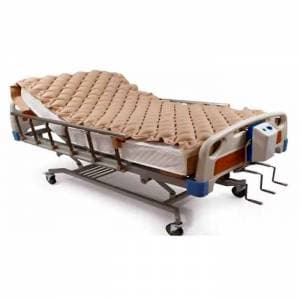
Alternating-pressure air mattress with pump — bubble and tubular types — to prevent and manage pressure sores in bedbound patients.
Available to buy
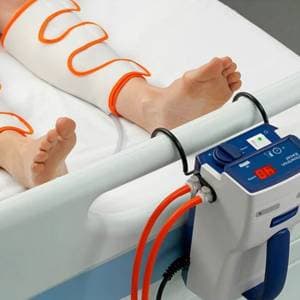
Intermittent pneumatic compression pump with calf or thigh sleeves, for deep vein thrombosis prophylaxis in immobile patients.
Available
Stocked for rental with delivery, installation and servicing included. Tell us how long you need it and we will quote for that period.
Available
Outright purchase including delivery, installation and a one-year warranty on manufacturing defects.
Get the best quote for this equipment
We price against what you actually need — how long, which configuration, whether nursing goes with it — rather than publishing a number that fits nobody. Ask and we will give you a straight one, GST stated separately.
Quotes state GST separately at the applicable rate. Rental and purchase are taxed differently.
When someone stops walking, the calf muscles stop pumping blood back up the legs, and blood that sits still clots. A DVT pump substitutes for the muscle: sleeves wrap the calves or thighs and inflate in a rolling sequence, squeezing blood upward, then deflate to let the veins refill. It is prophylaxis, not treatment — it exists to stop a clot forming in a patient who is bedbound after surgery, after a stroke, or through long-term immobility. Where a clot is already suspected, it must not be used until that is ruled out.
Which brand you receive depends on current stock. Tell us if you need a specific one and we will confirm before dispatch.
| Mode | Sequential intermittent pneumatic compression |
|---|---|
| Pressure range | 20–80 mmHg, adjustable |
| Cycle | Adjustable inflation and deflation intervals |
| Sleeves | Calf or full-leg, washable, in multiple sizesSizing matters — an oversized sleeve does not compress and an undersized one restricts. |
| Chambers | 3 or 4 per sleeve, inflating in sequence |
| Power | Mains, approximately 40 W |
| Length | 180 mm |
|---|---|
| Width | 280 mm |
| Height | 200 mm |
| Weight | Approximately 3.5 kg |
The things that are easy to find out too late.
Not for use over a suspected clot
If a DVT is already suspected or confirmed, compression can dislodge it. This must be ruled out by the treating clinician before the pump goes on.
Check the skin under the sleeves
Sleeves worn continuously trap heat and moisture. Remove them at least twice a day and check for redness, particularly over the shin and ankle bones.
It complements movement, it does not replace it
Where the patient can be helped to move their legs at all, that remains the better prophylaxis. The pump is for when they cannot.
Sizing is not cosmetic
A sleeve that does not fit does not deliver the pressure it reads. Measure the limb rather than guessing from the patient's build.
Device information, not medical advice. Suitability for a particular patient is a decision for the treating clinician.
The technician measures the limb, selects the correct sleeve size, fits the sleeves with two fingers' clearance, sets the pressure and cycle to the clinician's specification, runs a full inflation sequence, and shows the carer how to check the skin underneath.
An existing or suspected deep vein thrombosis must be ruled out by the treating clinician before compression is applied. Confirm limb circumference so the sleeve is sized rather than guessed.
Remove the sleeves at least twice daily and inspect the skin over the shin, ankle and heel. Sleeves are washable and should be laundered on the clinician's schedule.
Life-threatening, permanently damaging, or requiring hospitalisation.
Classified Class C (moderate–high risk) under India's Medical Devices Rules, 2017. CDSCO does not license rental or resale providers and Encone Care claims no CDSCO approval.
We deliver across Delhi NCR only. Check your pincode, or call us and we will tell you honestly whether we can reach you.
Items usually needed alongside this one — chosen because they solve an adjacent problem, not because they cost more.
Alternating-pressure air mattress with pump — bubble and tubular types — to prevent and manage pressure sores in bedbound patients.
Available to buy
Two- and three-function manual hospital bed with adjustable backrest and knee-rest, side rails and locking castors — the standard bed for home care after a hospital discharge.
Available on rent or to buy
A commissioned home critical-care package — ICU bed, air mattress, patient monitor, oxygen source and suction — installed and configured together in one visit.
Available on rent or to buy
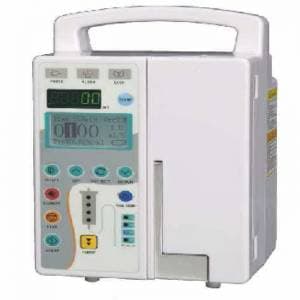
Volumetric infusion pump for controlled delivery of fluids, antibiotics and nutrition, with occlusion and air-in-line alarms.
Available to buy