
Wheelchair
Standard and folding manual wheelchairs with attendant brakes, footrests and removable arm rests — sized to the user rather than sold one-size-fits-all.
Available on rent or to buy
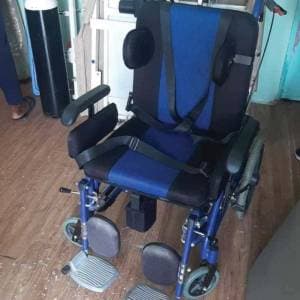
High-back reclining wheelchair with elevating leg rests and head support, for users who cannot sit upright for long periods.
Not on the rental fleet
This item is supplied for purchase. If you need something similar on rent, call us — we will tell you what the rental fleet can do instead.
Available
Outright purchase including delivery, installation and a one-year warranty on manufacturing defects.
Get the best quote for this equipment
We price against what you actually need — how long, which configuration, whether nursing goes with it — rather than publishing a number that fits nobody. Ask and we will give you a straight one, GST stated separately.
Quotes state GST separately at the applicable rate. Rental and purchase are taxed differently.
A reclining wheelchair lets the user shift between sitting and near-lying without leaving the chair, which matters for anyone who cannot hold an upright posture for long — poor trunk control, postural hypotension, advanced neurological disease, or simple fatigue. Changing the angle also redistributes pressure, which is why it suits patients who spend most of the day out of bed. It is heavier than a standard chair and is designed to be pushed rather than self-propelled.
Which brand you receive depends on current stock. Tell us if you need a specific one and we will confirm before dispatch.
| Backrest recline | Approximately 90–170° |
|---|---|
| Leg rests | Elevating, with calf support |
| Head support | Adjustable, removable |
| Brakes | Wheel brakes plus attendant brakes |
| Propulsion | Attendant-propelled; self-propelling rims optional |
| Frame | Powder-coated steel, folding |
| Length | 1150 mm |
|---|---|
| Width | 660 mm open |
| Height | 1300 mm |
| Weight | Approximately 22 kg |
| Load capacity | 115 kg |
The things that are easy to find out too late.
Sale only
The rental fleet carries standard manual wheelchairs. Ask us if you need a recliner short-term and we will see what can be arranged.
Recline further, tip more easily
A fully reclined chair moves its centre of gravity backwards. Anti-tip bars must stay fitted, and the attendant needs to know not to recline on a slope.
Recline slowly
Rapid angle changes cause dizziness and fainting, which is often the reason the user needs a reclining chair to begin with.
Not self-propelled in practice
At 22 kg with a reclining back, independent propulsion is unrealistic for most users. Plan on an attendant.
Device information, not medical advice. Suitability for a particular patient is a decision for the treating clinician.
Delivered assembled. The technician sets footrest length and backrest angle to the user's build, checks that the brakes hold on a slope, demonstrates detaching the arm and leg rests for a side transfer from a bed, and shows the attendant how to tilt the chair back to clear a kerb.
Confirm the user's weight is within the rated capacity and that doorways clear 700 mm. Establish whether the user will self-propel or be pushed — it changes which chair is correct. For all-day sitting, add a gel or air seat cushion.
Reposition the user and check skin over the sacrum and heels at least every two hours when seated for long periods. Brake holding force should be checked weekly; report any slip immediately rather than compensating for it.
Life-threatening, permanently damaging, or requiring hospitalisation.
Classified Class A (low risk) under India's Medical Devices Rules, 2017. CDSCO classifies devices and licenses manufacturers and importers; it does not license rental or resale providers, and Encone Care makes no claim of CDSCO approval.
We deliver across Delhi NCR only. Check your pincode, or call us and we will tell you honestly whether we can reach you.
Items usually needed alongside this one — chosen because they solve an adjacent problem, not because they cost more.
Standard and folding manual wheelchairs with attendant brakes, footrests and removable arm rests — sized to the user rather than sold one-size-fits-all.
Available on rent or to buy
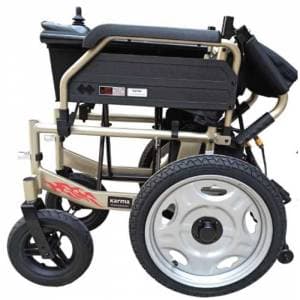
Battery-powered wheelchair with joystick control and foldable frame — independent mobility for users who cannot self-propel a manual chair.
Available to buy
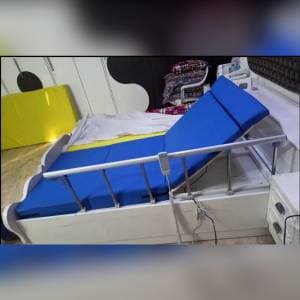
Motorised recliner bed that raises the patient toward a seated position for feeding, reading and transfers — for long-term care where dignity and independence matter.
Available to buy
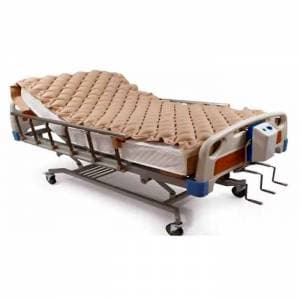
Alternating-pressure air mattress with pump — bubble and tubular types — to prevent and manage pressure sores in bedbound patients.
Available to buy