
Gloves & protection
Examination Gloves
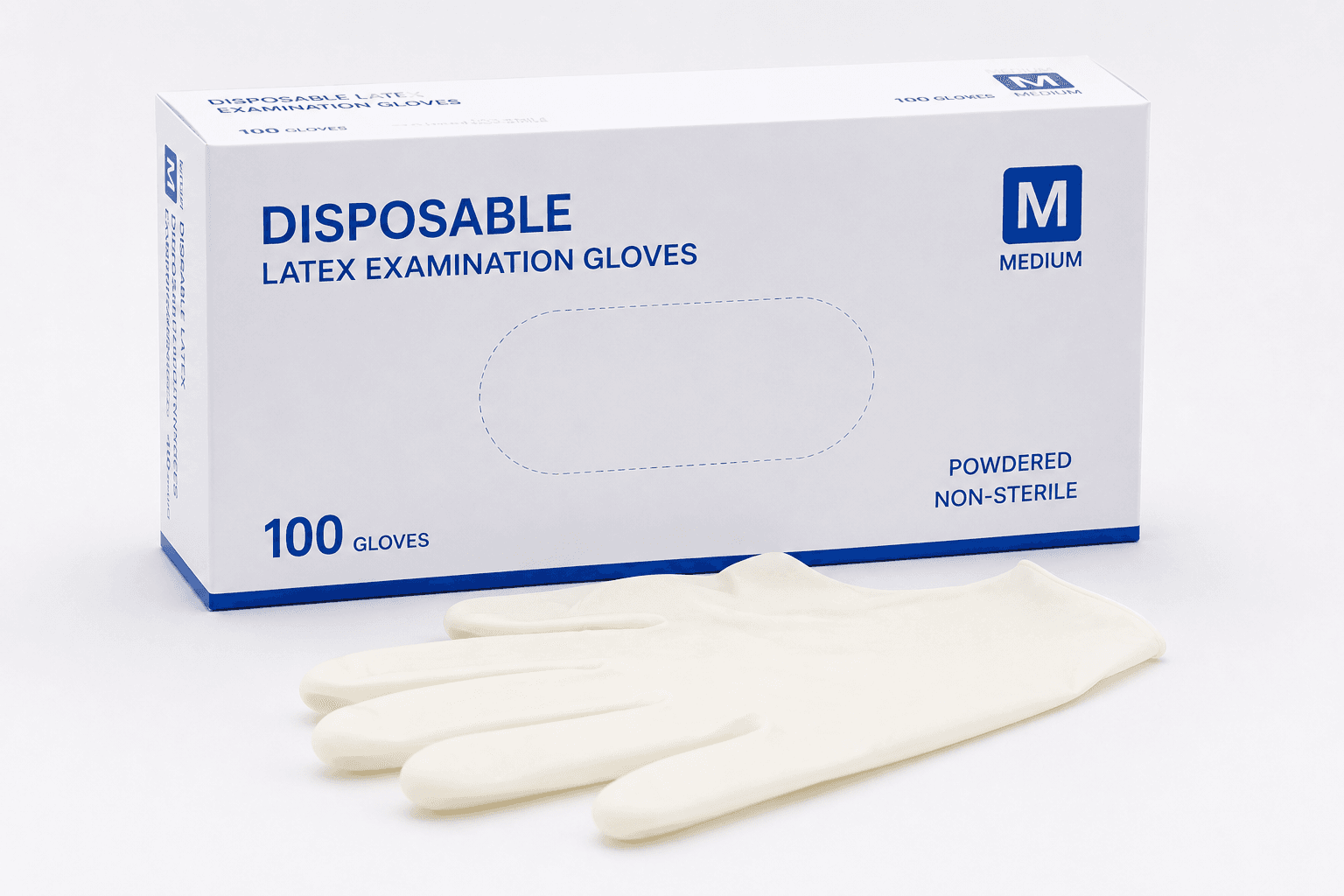
Nitrile and latex examination gloves, powder-free, in S/M/L/XL — for every hands-on care task at home.
Also searched as: hand gloves · medical gloves · disposable gloves
This is a clinical item. Read the safety information below before use. If nobody in the household has been trained, tell us when you order and we will arrange a nurse rather than leave you to it.
Get the best quote
Consumables are quoted by size and quantity, and it is usually cheaper per unit to set up a standing reorder than to buy pack by pack. Tell us the situation and we will work the sizes out with you.
Quotes state GST separately at the applicable rate.
What it is for
Gloves are the most used item in any home care room and the one most often used wrongly. The two common errors are wearing one pair through several different tasks, which moves organisms around as efficiently as bare hands would, and treating gloves as a replacement for handwashing rather than an addition to it. Nitrile is the sensible default: it fits like latex, resists punctures better, and avoids latex allergy entirely — which matters for the carer as much as the patient, since sensitivity builds with repeated exposure.
Sizes & variants
- Material
- Nitrile or latexNitrile is the default where anyone's latex allergy status is unknown.
- Sizes
- S, M, L, XL
- Powder
- Powder-freePowder carries latex protein and irritates skin and airways.
- Type
- Non-sterile examination, or sterile for aseptic procedures
- Packing
- Boxes of 100; sterile pairs individually wrapped
How to use it properly
- Wash hands before putting gloves on and after taking them off. Gloves add to hand hygiene, they do not replace it.
- Change between tasks on the same patient — catheter bag to feed is a task change.
- Remove without touching the outer surface, and dispose immediately.
- Sterile gloves for catheterisation and dressings; examination gloves for everything else.
Also know about
- Wearing one pair all morning is worse than no gloves
- It creates confidence without protection, and spreads organisms from task to task. The discipline is changing them, not wearing them.
- Latex allergy builds with exposure
- Carers doing this daily are the ones most at risk of becoming sensitised. Nitrile removes the question.
- Size affects safety
- Loose gloves snag and tear during procedures; tight ones split. Order a size per person rather than one box for the household.
Safety & clinical information
Device information, not medical advice. Suitability for a particular patient is a decision for the treating clinician.
How it is installed and used
Hands are washed before gloves go on and after they come off — gloves supplement hand hygiene, they do not replace it. Masks cover nose and mouth with the nose clip moulded to the bridge, and are handled by the straps only. Both are removed without touching the outer surface and disposed of immediately.
Ongoing care and servicing
Gloves are changed between tasks on the same patient, not just between patients — moving from a catheter bag to a feed with the same gloves transfers exactly what the gloves were meant to stop. Masks are replaced when damp.
When not to use it
- Latex gloves where anyone involved has a latex allergy
- Latex sensitivity affects carers as well as patients, and reactions worsen with repeated exposure. Nitrile is the default where allergy status is unknown.
- Reuse of single-use gloves or masks
- Washing and reusing examination gloves damages the barrier invisibly. A reused item provides false confidence rather than protection.
Possible side effects
- Contact dermatitis and skin irritation
- From prolonged glove use, trapped moisture, or latex sensitivity. Powder-free nitrile and drying hands properly both help.
- Cross-contamination from gloves worn too long
- Gloves worn from task to task spread organisms as effectively as bare hands. The failure here is behavioural, not material.
- Facial pressure injury from tight mask straps
- Relevant for carers wearing a mask through a long shift; rotate the strap position and take breaks where it is safe to.
Regulatory status
Examination gloves and face masks are notified medical devices under India's Medical Devices Rules, 2017. Supplied as single-use items; Encone Care claims no CDSCO approval.
Relevant specialties
- Nursing
- PublicHealth
About examination gloves
Nitrile or latex gloves — which is better for home care?
Do I still need to wash my hands if I wear gloves?
How often should gloves be changed?
Used with
Updated 6 August 2026. Product information, not medical advice — sizes and technique are decisions for the treating clinician.