Portable Suction Machine
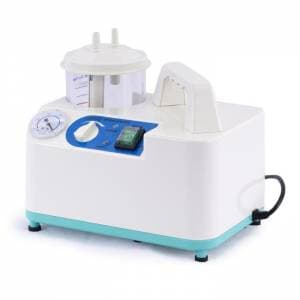
Battery-operated suction unit for airway clearance during transport and power cuts — the backup that matters for a tracheostomised patient.
Available to buy
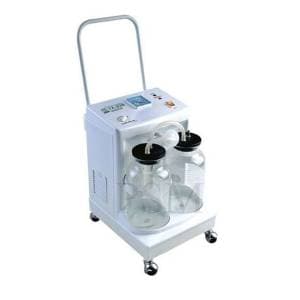
Mains-powered surgical suction unit with adjustable vacuum regulator and autoclavable collection jars, for airway clearance in tracheostomy and bedbound patients.
Available
Stocked for rental with delivery, installation and servicing included. Tell us how long you need it and we will quote for that period.
Available
Outright purchase including delivery, installation and a one-year warranty on manufacturing defects.
Get the best quote for this equipment
We price against what you actually need — how long, which configuration, whether nursing goes with it — rather than publishing a number that fits nobody. Ask and we will give you a straight one, GST stated separately.
Quotes state GST separately at the applicable rate. Rental and purchase are taxed differently.
A suction machine clears secretions a patient cannot clear themselves. For someone with a tracheostomy, a weak cough after a stroke, or advanced neuromuscular disease, this is not comfort equipment — retained secretions become pneumonia within days. The unit is simple: a vacuum pump, a regulator to set the pressure, and a jar that catches what comes out. What is not simple is the technique, and getting it wrong causes bleeding and hypoxia. We set the pressure to the clinician's number and take the carer through a full pass before leaving.
Which brand you receive depends on current stock. Tell us if you need a specific one and we will confirm before dispatch.
| Vacuum range | 0–760 mmHg, adjustable |
|---|---|
| Flow rate | Approximately 40–60 L/min |
| Collection jars | 2 × 1000 ml, autoclavable, with overflow protection |
| Power | Mains, approximately 130 W |
| Regulator | Dial with gaugePressure is set to the treating clinician's specification, not to maximum. |
| Filter | Bacterial filter between jar and pump |
| Length | 260 mm |
|---|---|
| Width | 360 mm |
| Height | 330 mm |
| Weight | Approximately 6 kg |
The things that are easy to find out too late.
Technique matters more than the machine
Suction is applied on withdrawal only, never on insertion, and a pass should not exceed ten to fifteen seconds. Longer passes remove air along with secretions and desaturate the patient.
Pressure is prescribed
Turning the regulator to maximum strips the airway lining and causes bleeding. The correct pressure varies by patient and by whether the airway is native or tracheostomised.
The jar is an infection route
Empty and disinfect after every use. A jar left standing is a bacterial culture connected directly to the patient's airway.
You need a backup plan for power cuts
A mains suction unit stops with the power. For a patient who needs frequent suction, a portable battery unit alongside it is not optional.
Device information, not medical advice. Suitability for a particular patient is a decision for the treating clinician.
Assembled with the collection jar, tubing and the catheter sizes appropriate to the patient. The technician sets the vacuum regulator to the pressure the treating clinician has specified, tests it against a sealed finger, and takes the carer through a full suction pass including how long to apply it and when to stop.
Suction pressure and catheter size must come from the treating clinician — both vary with the patient and with whether the airway is native or tracheostomised. A trained attendant should perform the technique.
The collection jar is emptied and disinfected after every use, and tubing changed on the clinician's schedule. Catheters are single-use. Suction is applied on withdrawal only, never on insertion.
Life-threatening, permanently damaging, or requiring hospitalisation.
Classified Class B (low–moderate risk) under India's Medical Devices Rules, 2017. CDSCO does not license rental or resale providers and Encone Care claims no CDSCO approval.
We deliver across Delhi NCR only. Check your pincode, or call us and we will tell you honestly whether we can reach you.
Items usually needed alongside this one — chosen because they solve an adjacent problem, not because they cost more.
Battery-operated suction unit for airway clearance during transport and power cuts — the backup that matters for a tracheostomised patient.
Available to buy
A commissioned home critical-care package — ICU bed, air mattress, patient monitor, oxygen source and suction — installed and configured together in one visit.
Available on rent or to buy
5 LPM and 10 LPM continuous-flow oxygen concentrators with humidifier, low-purity alarm and power-failure alarm — supplied only against a prescribed flow rate.
Available on rent or to buy