Feeding
Ryles Tube (Nasogastric Feeding Tube)
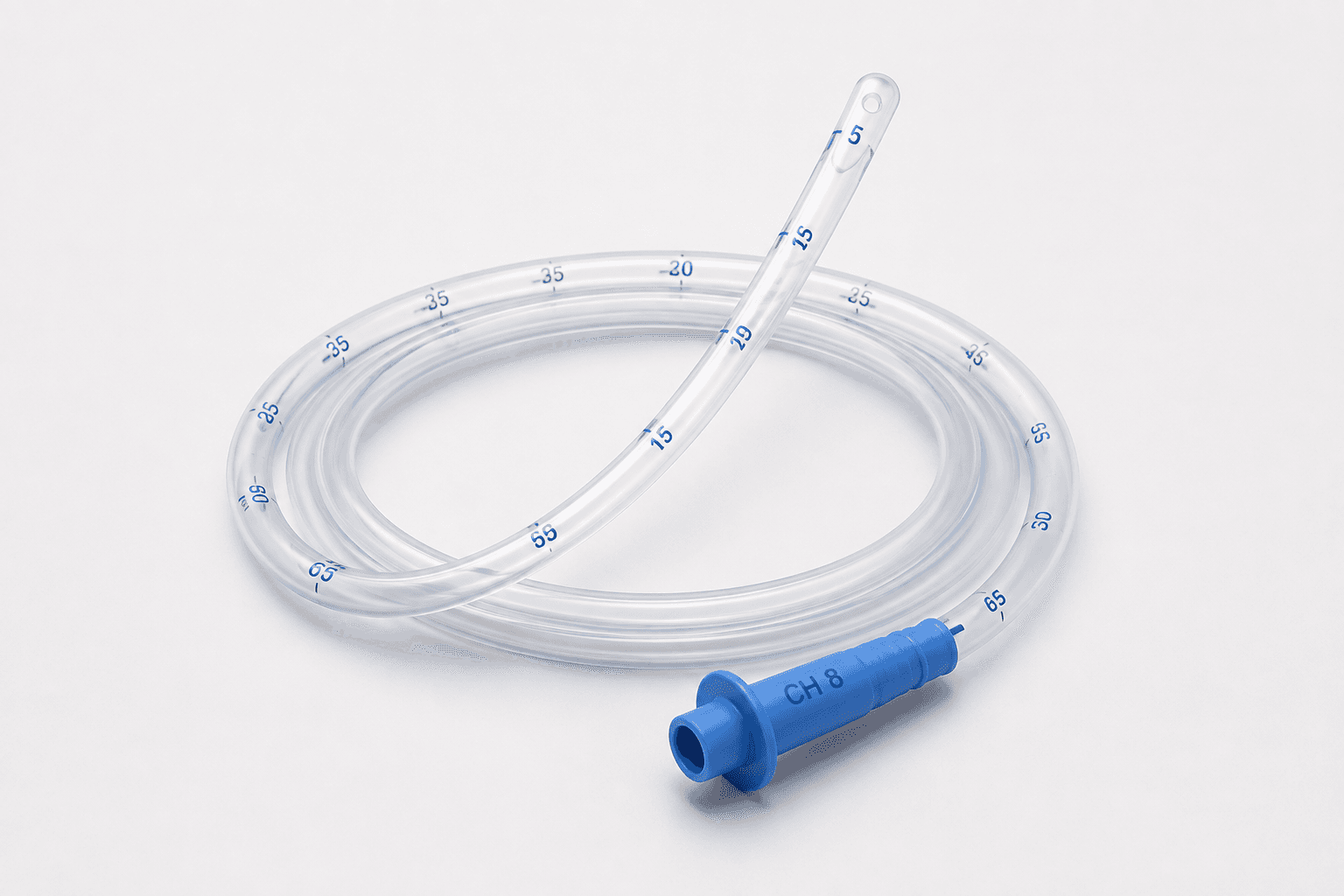
Sterile PVC nasogastric tube in sizes 8 Fr to 18 Fr for feeding and gastric drainage — position must be confirmed before anything is given through it.
Also searched as: food pipe · khane ki nali · NG tube · nasogastric tube
This is a clinical item. Read the safety information below before use. If nobody in the household has been trained, tell us when you order and we will arrange a nurse rather than leave you to it.
Get the best quote
Consumables are quoted by size and quantity, and it is usually cheaper per unit to set up a standing reorder than to buy pack by pack. Tell us the situation and we will work the sizes out with you.
Quotes state GST separately at the applicable rate.
What it is for
A Ryles tube passes through the nose into the stomach so that feed, fluids and medication can be given to someone who cannot safely swallow — after a stroke, with advanced neurological disease, or while unconscious. It is a simple object attached to a serious rule: a tube that has gone into the lung instead of the stomach looks and feels exactly the same from outside. Feeding into it is fatal, and it is a recognised never-event. Position is confirmed by pH testing the aspirate, or by X-ray when the clinician requires it — the old practice of pushing air in and listening does not work.
Sizes & variants
- Sizes
- 8, 10, 12, 14, 16, 18 FrFiner tubes are more comfortable for feeding; wider ones are used for drainage.
- Material
- Medical-grade PVC, radio-opaque lineThe radio-opaque line is what lets an X-ray confirm the tip position.
- Length
- Approximately 105 cm, graduated markings
- Tip
- Rounded, multiple lateral eyes
- Supplied
- Sterile, individually wrapped, single-use
How to use it properly
- Placed by a trained nurse; the measured external length is marked and recorded.
- Confirm position by pH of the aspirate (or X-ray) before the first feed and after any displacement.
- The 'whoosh test' — pushing air in and listening — is not a valid check.
- Check the external marking before every feed to confirm the tube has not moved.
- Head of the bed at 30–45° during feeding and for 30 minutes afterwards.
- Flush with water before and after every feed and every medication.
Also know about
- This is the item on this page with the highest stakes
- Feeding into a misplaced tube causes pneumonia or death, and it is preventable entirely by confirming position. If nobody in the household has been taught the check, do not use the tube — arrange a nurse.
- Crushed tablets block tubes
- Most blockages come from medication rather than feed. Ask the clinician for liquid formulations, and flush thoroughly around every dose.
- Re-tape daily, in a slightly different spot
- Constant pressure at one point on the nostril causes an ulcer within days.
- It is a short-term route
- Beyond about four to six weeks, a gastrostomy is usually more comfortable and safer. Worth asking the clinician about at review.
Safety & clinical information
Device information, not medical advice. Suitability for a particular patient is a decision for the treating clinician.
How it is installed and used
Placed by a trained nurse: the length is measured from nose to ear to xiphisternum and marked, the tube lubricated and passed through the nostril while the patient swallows, then the position is confirmed before anything is given. The tube is secured to the nose so it cannot migrate, and the external length is recorded.
Before delivery
Tube placement must be confirmed by pH testing of the aspirate, or by X-ray where the clinician requires it. The 'whoosh test' — pushing air in and listening — is not a valid check and has caused deaths.
Ongoing care and servicing
Check the external marking before every feed to confirm the tube has not migrated. Flush with water before and after feeds and medication. Keep the head of the bed raised at 30–45° during feeding and for at least 30 minutes after.
When not to use it
- Base-of-skull fracture or severe facial trauma
- A nasally passed tube can enter the cranial cavity through a fracture. These patients need an oral or surgically placed route.
- Feeding before tube position is confirmed
- A tube that has passed into the lung looks and feels identical from outside. Feeding into it is fatal, which is why pH or X-ray confirmation is mandatory rather than advisory.
- Oesophageal varices or stricture
- Passing a tube past varices risks catastrophic bleeding; a stricture risks perforation. Both need specialist assessment first.
Possible side effects
- Nasal and pharyngeal discomfort or ulceration
- Pressure from the tube against the nostril causes soreness and, over time, skin breakdown. Re-tape in a slightly different position daily.
- Tube blockage
- From thick feed or crushed medication. Flush with water before and after everything that goes down the tube.
Serious risks
Life-threatening, permanently damaging, or requiring hospitalisation.
- Aspiration pneumonia
- Feed entering the lungs — from a displaced tube, or from feeding a patient lying flat — causes pneumonia and can be fatal.
- Feeding into the respiratory tract
- If an unconfirmed tube has passed into the lung, feed delivered into it is immediately life-threatening.
Regulatory status
Enteral feeding tubes are notified medical devices under India's Medical Devices Rules, 2017, supplied sterile and single-use. Encone Care claims no CDSCO approval.
Relevant specialties
- Nursing
- Gastroenterologic
- Geriatric medicine
About ryles tube (nasogastric feeding tube)
How do I know a Ryles tube is in the right place?
How long can a Ryles tube stay in?
Can a family member pass a Ryles tube?
Used with
Updated 6 August 2026. Product information, not medical advice — sizes and technique are decisions for the treating clinician.