Oxygen Concentrator
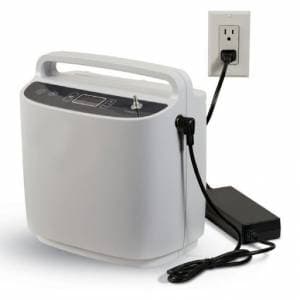
5 LPM and 10 LPM continuous-flow oxygen concentrators with humidifier, low-purity alarm and power-failure alarm — supplied only against a prescribed flow rate.
Available on rent or to buy
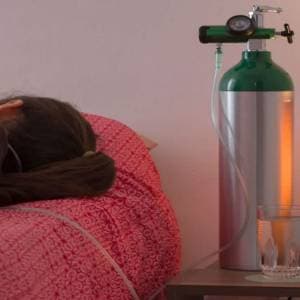
Portable and large medical oxygen cylinders supplied with regulator, flow meter, humidifier and trolley — for backup, transport and short-term therapy.
Available
Stocked for rental with delivery, installation and servicing included. Tell us how long you need it and we will quote for that period.
Available
Outright purchase including delivery, installation and a one-year warranty on manufacturing defects.
Get the best quote for this equipment
We price against what you actually need — how long, which configuration, whether nursing goes with it — rather than publishing a number that fits nobody. Ask and we will give you a straight one, GST stated separately.
Quotes state GST separately at the applicable rate. Rental and purchase are taxed differently.
A cylinder holds compressed medical oxygen and delivers it through a regulator, which means it works with no electricity at all. That single property is why almost every oxygen-dependent patient at home should have one even if they also have a concentrator: when the power goes, the concentrator stops and the cylinder does not. Sizes run from small portable units for a hospital visit or a trip to the clinic, up to large static cylinders for continuous supply. The trade-off is that a cylinder empties, and someone has to notice before it does.
Which brand you receive depends on current stock. Tell us if you need a specific one and we will confirm before dispatch.
| Sizes | Portable (B-type, ~10 L water capacity) and large (D-type, ~46.7 L) |
|---|---|
| Approximate duration | A D-type cylinder runs roughly 8–9 hours at 5 LPMHalve the time if you double the flow. Plan refills against this, not against a feeling. |
| Regulator | Twin-gauge, included — cylinder pressure and delivered flow |
| Flow range | 0–15 LPM |
| Humidifier | Included; distilled water only |
| Trolley | Supplied with large cylinders |
| Height | Approximately 700 mm portable; 1320 mm large |
|---|---|
| Weight | Approximately 10 kg portable; 60 kg large when full |
The things that are easy to find out too late.
Refilling is on you to schedule
A cylinder gives no warning beyond the pressure gauge. Read it daily and arrange the refill at a quarter full, not when it runs out at 3 AM.
It must be secured upright
A full D-type cylinder weighs around 60 kg. Toppled, it can injure someone or shear the valve. It stays on the trolley or chained to a wall — never propped against furniture.
Cold hands at high flow
Gas expanding through the regulator gets cold. This is normal, but it is why the regulator should not be adjusted with wet hands in winter.
Same fire rules as a concentrator
Oxygen enrichment makes everything nearby burn faster. No flame, no smoking, no oil-based emollient on the patient's face.
Device information, not medical advice. Suitability for a particular patient is a decision for the treating clinician.
Delivered upright on a trolley or secured to a wall bracket. The technician fits the regulator, checks for leaks at the valve, sets the prescribed flow, fills the humidifier with distilled water, and shows the carer how to read the contents gauge and when to call for a refill.
A prescribed flow rate from the treating clinician is required before delivery — oxygen is not supplied on a guessed setting. Confirm a stable power supply, and for oxygen-dependent patients arrange a backup cylinder or an inverter rated for the unit's continuous load.
The gross particle filter is washed weekly and the outlet filter replaced per the manufacturer's schedule. Oxygen saturation should be monitored as directed by the treating clinician, and any change in flow rate must come from them, not from the family.
Life-threatening, permanently damaging, or requiring hospitalisation.
Classified Class B (low–moderate risk) under India's Medical Devices Rules, 2017. CDSCO does not license rental or resale providers and Encone Care claims no CDSCO approval.
We deliver across Delhi NCR only. Check your pincode, or call us and we will tell you honestly whether we can reach you.
Items usually needed alongside this one — chosen because they solve an adjacent problem, not because they cost more.
5 LPM and 10 LPM continuous-flow oxygen concentrators with humidifier, low-purity alarm and power-failure alarm — supplied only against a prescribed flow rate.
Available on rent or to buy
Battery-powered pulse-dose oxygen concentrator, cabin-approved and light enough to carry — for patients who need oxygen but not confinement.
Available to buy
A commissioned home critical-care package — ICU bed, air mattress, patient monitor, oxygen source and suction — installed and configured together in one visit.
Available on rent or to buy