Cardiac Monitor
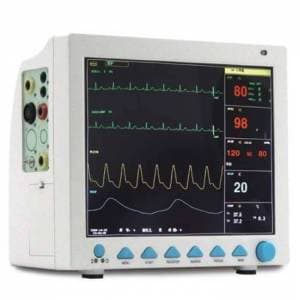
ECG-focused bedside monitor with arrhythmia detection and ST-segment analysis for patients under cardiac observation at home.
Available on rent or to buy
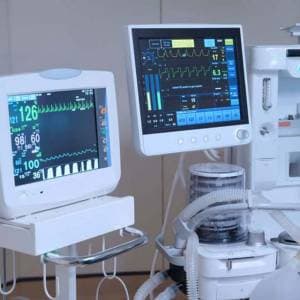
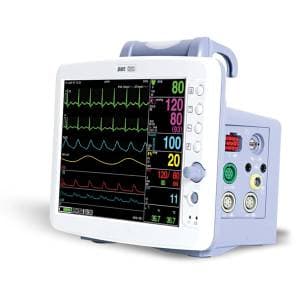
Multi-parameter bedside monitor covering ECG, SpO₂, non-invasive blood pressure, respiration and temperature, with alarm limits configured at installation.
Available
Stocked for rental with delivery, installation and servicing included. Tell us how long you need it and we will quote for that period.
Available
Outright purchase including delivery, installation and a one-year warranty on manufacturing defects.
Get the best quote for this equipment
We price against what you actually need — how long, which configuration, whether nursing goes with it — rather than publishing a number that fits nobody. Ask and we will give you a straight one, GST stated separately.
Quotes state GST separately at the applicable rate. Rental and purchase are taxed differently.
A bedside monitor turns a set of intermittent spot checks into a continuous picture, which matters when a patient can deteriorate between one observation and the next. It tracks heart rhythm, oxygen saturation, blood pressure, respiration and temperature, and alarms when any of them leaves the range set for that patient. The important word is *set*: factory default limits alarm constantly on a home patient, the family mutes the monitor, and a muted monitor is worse than no monitor at all. We configure the limits to the treating doctor's instructions at installation.
Which brand you receive depends on current stock. Tell us if you need a specific one and we will confirm before dispatch.
| Parameters | ECG, SpO₂, NIBP, respiration, temperature; etCO₂ on 7-para models |
|---|---|
| Display | 10.1" or 12.1" colour TFT, multi-trace |
| Alarms | Configurable upper and lower limits on every parameterSet to the treating doctor's numbers at installation, not left on defaults. |
| Trend storage | Up to 120 hours of tabular and graphical trend |
| Battery | 2–4 hours internal backup |
| Accessories | ECG leads, SpO₂ finger probe, adult NIBP cuff, temperature probe |
| Length | 160 mm |
|---|---|
| Width | 300 mm |
| Height | 260 mm |
| Weight | Approximately 4.5 kg |
The things that are easy to find out too late.
A monitor does not treat anyone
It reports. Without a trained attendant who can interpret a falling saturation and act on it, a monitor mostly generates anxiety. If nobody trained will be present, a pulse oximeter and clear escalation instructions are the better purchase.
Alarm fatigue is the real risk
Badly set limits alarm all night, the family mutes them, and the one genuine event is missed. This is the commonest way home monitoring fails, and it is entirely a configuration problem.
Probes are consumables
SpO₂ finger probes degrade after four to six months of continuous use and start reading low, which triggers false alarms.
Rotate the sensor sites
Electrodes, probes and cuffs left in one position cause skin irritation and pressure marks, particularly on frail skin.
Device information, not medical advice. Suitability for a particular patient is a decision for the treating clinician.
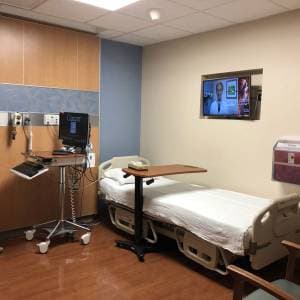
Mounted on a bedside stand within the carer's line of sight. The technician connects the leads, probe and cuff, then sets every alarm limit to the treating doctor's instructions rather than leaving factory defaults, and demonstrates silencing versus acknowledging an alarm.
Confirm a trained attendant or nurse will be present to act on what the monitor shows, and obtain the treating doctor's alarm limits. Without both, a monitor produces anxiety rather than safety.
Finger probes degrade after four to six months of continuous use. Electrodes and sampling lines are consumables. Alarm limits should be revisited whenever the patient's clinical condition changes.
Life-threatening, permanently damaging, or requiring hospitalisation.
Classified Class C (moderate–high risk) under India's Medical Devices Rules, 2017. CDSCO does not license rental or resale providers and Encone Care claims no CDSCO approval.
We deliver across Delhi NCR only. Check your pincode, or call us and we will tell you honestly whether we can reach you.
Items usually needed alongside this one — chosen because they solve an adjacent problem, not because they cost more.
ECG-focused bedside monitor with arrhythmia detection and ST-segment analysis for patients under cardiac observation at home.
Available on rent or to buy
Five- and seven-parameter bedside monitor with etCO₂ capability, for facilities and permanent high-dependency rooms.
Available to buy
A commissioned home critical-care package — ICU bed, air mattress, patient monitor, oxygen source and suction — installed and configured together in one visit.
Available on rent or to buy