Suction Machine
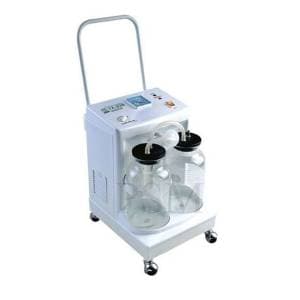
Mains-powered surgical suction unit with adjustable vacuum regulator and autoclavable collection jars, for airway clearance in tracheostomy and bedbound patients.
Available on rent or to buy
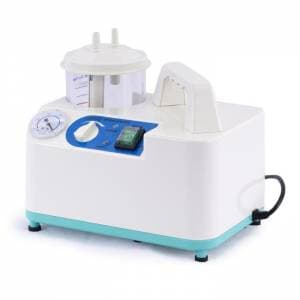
Battery-operated suction unit for airway clearance during transport and power cuts — the backup that matters for a tracheostomised patient.
Not on the rental fleet
This item is supplied for purchase. If you need something similar on rent, call us — we will tell you what the rental fleet can do instead.
Available
Outright purchase including delivery, installation and a one-year warranty on manufacturing defects.
Get the best quote for this equipment
We price against what you actually need — how long, which configuration, whether nursing goes with it — rather than publishing a number that fits nobody. Ask and we will give you a straight one, GST stated separately.
Quotes state GST separately at the applicable rate. Rental and purchase are taxed differently.
A mains suction machine stops when the power does. For a patient who needs frequent airway clearance, that is not an inconvenience, it is the emergency the equipment exists to prevent. A portable unit runs off an internal battery and a car adaptor, which covers both the power cut at home and the journey to hospital. It is smaller and its jar is smaller, so it is a companion to a mains unit rather than a replacement — but for a tracheostomised patient it is the one that gets used at the worst moment.
Which brand you receive depends on current stock. Tell us if you need a specific one and we will confirm before dispatch.
| Vacuum range | 0–600 mmHg, adjustable |
|---|---|
| Flow rate | Approximately 18–25 L/min |
| Collection jar | 300–800 ml with overflow protection |
| Battery | Approximately 45–60 minutes continuous |
| Power | Internal battery, mains charger and 12 V car adaptor |
| Weight | Light enough to carry one-handed with the patient |
| Length | 170 mm |
|---|---|
| Width | 250 mm |
| Height | 180 mm |
| Weight | Approximately 3 kg |
The things that are easy to find out too late.
Sale only
The rental fleet carries the mains suction unit. Portables are supplied for purchase.
It is a companion, not a replacement
Lower vacuum, smaller jar, limited battery. For routine daily suction the mains unit is the right tool; this is for when the mains unit cannot be used.
Keep it charged
A portable suction unit with a flat battery is furniture. Charge it on a schedule, not when you next need it.
Same technique, same risks
Suction on withdrawal only, passes under fifteen seconds, prescribed pressure. Being portable changes none of that.
Device information, not medical advice. Suitability for a particular patient is a decision for the treating clinician.
Assembled with the collection jar, tubing and the catheter sizes appropriate to the patient. The technician sets the vacuum regulator to the pressure the treating clinician has specified, tests it against a sealed finger, and takes the carer through a full suction pass including how long to apply it and when to stop.
Suction pressure and catheter size must come from the treating clinician — both vary with the patient and with whether the airway is native or tracheostomised. A trained attendant should perform the technique.
The collection jar is emptied and disinfected after every use, and tubing changed on the clinician's schedule. Catheters are single-use. Suction is applied on withdrawal only, never on insertion.
Life-threatening, permanently damaging, or requiring hospitalisation.
Classified Class B (low–moderate risk) under India's Medical Devices Rules, 2017. CDSCO does not license rental or resale providers and Encone Care claims no CDSCO approval.
We deliver across Delhi NCR only. Check your pincode, or call us and we will tell you honestly whether we can reach you.
Items usually needed alongside this one — chosen because they solve an adjacent problem, not because they cost more.
Mains-powered surgical suction unit with adjustable vacuum regulator and autoclavable collection jars, for airway clearance in tracheostomy and bedbound patients.
Available on rent or to buy
A commissioned home critical-care package — ICU bed, air mattress, patient monitor, oxygen source and suction — installed and configured together in one visit.
Available on rent or to buy
Portable and large medical oxygen cylinders supplied with regulator, flow meter, humidifier and trolley — for backup, transport and short-term therapy.
Available on rent or to buy