
Airway & suction
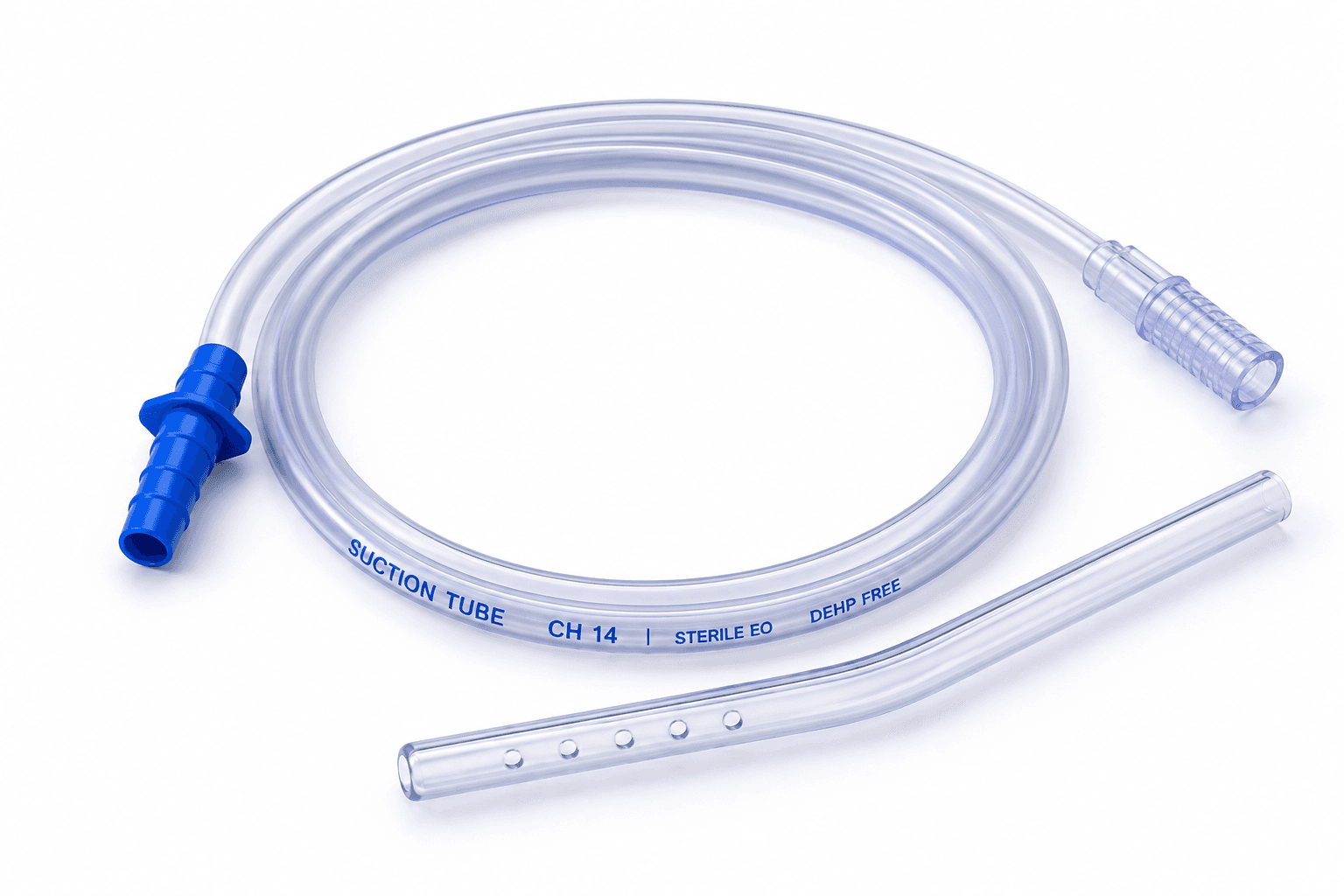
Suction Catheter
Sterile single-use suction catheters in sizes 6 Fr to 16 Fr with thumb-control vent, for clearing secretions through the mouth, nose or a tracheostomy.
Also searched as: suction tube · kaf nikalne ki nali · aspiration catheter
This is a clinical item. Read the safety information below before use. If nobody in the household has been trained, tell us when you order and we will arrange a nurse rather than leave you to it.
Get the best quote
Consumables are quoted by size and quantity, and it is usually cheaper per unit to set up a standing reorder than to buy pack by pack. Tell us the situation and we will work the sizes out with you.
Quotes state GST separately at the applicable rate.
What it is for
A suction catheter is the disposable tube that connects the patient to the suction machine. Size matters more than people expect: a catheter more than about half the internal diameter of the tracheostomy tube blocks the airway while suction is applied, so the patient cannot breathe in during the pass. The thumb vent exists so suction is applied only on withdrawal — covering it on the way in drags the catheter against the airway wall and strips the lining.
Sizes & variants
- Sizes
- 6, 8, 10, 12, 14, 16 FrFor a tracheostomy, no more than half the tube's internal diameter.
- Control
- Thumb-control ventSuction on withdrawal only — never on insertion.
- Tip
- Rounded with lateral eyes to reduce mucosal trauma
- Length
- 50–60 cm
- Supplied
- Sterile, individually wrapped, single-use
How to use it properly
- One catheter per pass. They are single-use — reusing one puts organisms straight into the airway.
- Suction on withdrawal only, using the thumb vent.
- Keep each pass under ten to fifteen seconds; longer passes remove air along with secretions.
- Let the patient recover between passes, on oxygen if they are prescribed it.
- Set the vacuum pressure to the clinician's figure, not to maximum.
Also know about
- Suction only when needed
- Routine suctioning on a fixed schedule causes unnecessary trauma. Suction on signs — audible secretions, rising work of breathing, falling saturation — not on the clock.
- Desaturation during suction is expected; sustained desaturation is not
- If saturation does not recover promptly between passes, stop and call the clinician rather than suctioning more.
- Sizing for a tracheostomy is a calculation
- Halve the tube's internal diameter in millimetres and multiply by three to get the maximum French size. Ask the clinician to confirm it once and write it down.
Safety & clinical information
Device information, not medical advice. Suitability for a particular patient is a decision for the treating clinician.
How it is installed and used
A fresh sterile catheter is used for each pass. It is introduced with the thumb vent open, advanced without suction, then suction is applied only as it is withdrawn with a gentle rotating motion. Each pass is kept under ten to fifteen seconds and the patient is allowed to recover between passes.
Before delivery
Catheter size and vacuum pressure come from the treating clinician. For a tracheostomy the catheter must not exceed half the tube's internal diameter, or it obstructs the airway during the pass.
Ongoing care and servicing
Catheters are single-use and discarded after every pass. The collection jar is emptied and disinfected after every session, and tubing changed on the clinician's schedule.
When not to use it
- Untrained carer performing deep suction
- Deep and tracheal suction are clinical skills. Performed blind or too forcefully they cause bleeding and hypoxia.
- Use without a prescribed vacuum pressure
- Excessive pressure strips the airway lining. The regulator exists so the pressure can be set, not guessed.
- Reuse of a single-use catheter
- A rinsed catheter carries organisms directly into the airway. These are discarded after one pass, not washed.
- Oversized catheter in a tracheostomy
- A catheter more than half the internal diameter of the tracheostomy tube occludes the airway while suction is applied, so the patient cannot breathe in during the pass.
Possible side effects
- Mucosal trauma and bleeding
- Too much pressure, too large a catheter, or suction applied on insertion damages the airway lining.
- Infection from a poorly reprocessed circuit
- Jars, tubing and catheters are direct routes into the airway when cleaning or replacement schedules slip.
Serious risks
Life-threatening, permanently damaging, or requiring hospitalisation.
- Hypoxia from prolonged suction passes
- Suction removes air along with secretions. Passes longer than about ten to fifteen seconds can desaturate an already compromised patient.
- Vagal bradycardia or cardiac arrest
- Stimulating the airway can trigger a profound drop in heart rate, particularly in unwell or paediatric patients.
Regulatory status
Suction catheters are notified medical devices under India's Medical Devices Rules, 2017, supplied sterile and single-use. CDSCO does not license resale providers and Encone Care claims no CDSCO approval.
Relevant specialties
- Respiratory therapy
- Nursing
- Emergency medicine
About suction catheter
What size suction catheter should I use for a tracheostomy?
Can suction catheters be reused after washing?
How long should each suction pass last?
Used with
Updated 6 August 2026. Product information, not medical advice — sizes and technique are decisions for the treating clinician.