BiPAP Machine
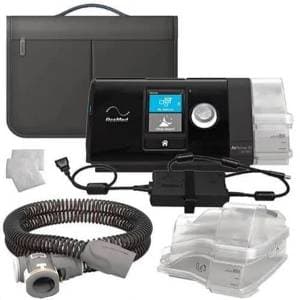
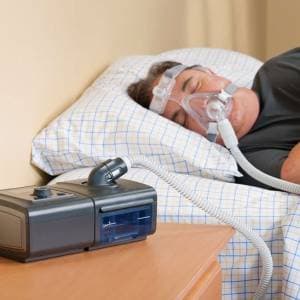
Bi-level positive airway pressure machine with heated humidifier, supplied with an in-person mask fitting and clinician-set pressures.
Available on rent or to buy
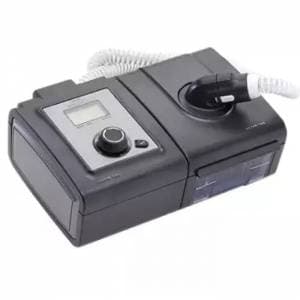
Advanced bi-level system with timed backup rate and volume-assured pressure support, for chronic respiratory failure and neuromuscular weakness.
Not on the rental fleet
This item is supplied for purchase. If you need something similar on rent, call us — we will tell you what the rental fleet can do instead.
Available
Outright purchase including delivery, installation and a one-year warranty on manufacturing defects.
Get the best quote for this equipment
We price against what you actually need — how long, which configuration, whether nursing goes with it — rather than publishing a number that fits nobody. Ask and we will give you a straight one, GST stated separately.
Quotes state GST separately at the applicable rate. Rental and purchase are taxed differently.
Standard BiPAP waits for the patient to start each breath. An S/T machine adds a timed backup rate, so if the patient does not trigger a breath within a set interval, the machine delivers one anyway — which matters in neuromuscular disease, in central apnoea, and in anyone whose respiratory drive is unreliable. AVAPS goes further and adjusts pressure automatically to hold a target tidal volume, so ventilation stays constant as the patient's mechanics change through the night. This is home ventilation rather than sleep therapy, and it is prescribed accordingly.
Which brand you receive depends on current stock. Tell us if you need a specific one and we will confirm before dispatch.
| Pressure range | 4–30 cm H₂O |
|---|---|
| Modes | S, S/T, T, PC and AVAPS depending on model |
| Backup rate | Adjustable timed breaths per minute |
| AVAPS | Automatic pressure adjustment to a target tidal volume |
| Alarms | Disconnect, low tidal volume, apnoea, power failure |
| Humidifier | Heated, integrated |
| Data | Detailed ventilation logging for the treating clinician |
| Length | 165 mm |
|---|---|
| Width | 285 mm |
| Height | 95 mm |
| Weight | Approximately 2 kg with humidifier |
The things that are easy to find out too late.
Sale only
The rental fleet carries standard BiPAP. This is a prescribed home ventilator and is supplied for purchase against a specialist's settings.
This is ventilation, not sleep therapy
Settings come from a respiratory specialist and normally follow a titration study. Trained cover should be available, particularly overnight.
Alarms need setting and attending
Disconnect and low-tidal-volume alarms are the safety net for a patient who cannot breathe adequately unaided. Muting them removes the point of the machine.
Power backup is not optional
For a patient dependent on ventilatory support, an inverter sized for overnight running is part of the setup, not an accessory.
Device information, not medical advice. Suitability for a particular patient is a decision for the treating clinician.
The mask is fitted to the patient's face in person — nasal, nasal-pillow and full-face styles are tried rather than a medium being assumed, because mask leak is the single most common reason home therapy is abandoned. Pressures, mode and ramp are set to the clinician's prescription, the humidifier is filled with distilled water, and the settings are confirmed before the technician leaves.
A sleep study or blood gas assessment and clinician-set pressures are required before delivery. Machines are not supplied on guessed settings. Confirm mains supply and, for dependent patients, that an inverter can carry the unit overnight.
Mask cushions are replaced roughly every three months and filters monthly. Compliance data is available on the device for the treating clinician. We re-fit the mask free within the first two weeks, which is when most fit problems surface.
Life-threatening, permanently damaging, or requiring hospitalisation.
Classified Class C (moderate–high risk) under India's Medical Devices Rules, 2017. CDSCO does not license rental or resale providers and Encone Care claims no CDSCO approval.
We deliver across Delhi NCR only. Check your pincode, or call us and we will tell you honestly whether we can reach you.
Items usually needed alongside this one — chosen because they solve an adjacent problem, not because they cost more.
Bi-level positive airway pressure machine with heated humidifier, supplied with an in-person mask fitting and clinician-set pressures.
Available on rent or to buy
Auto-titrating CPAP that adjusts pressure breath by breath within a prescribed range — for patients whose pressure requirement varies through the night.
Available to buy
A commissioned home critical-care package — ICU bed, air mattress, patient monitor, oxygen source and suction — installed and configured together in one visit.
Available on rent or to buy
5 LPM and 10 LPM continuous-flow oxygen concentrators with humidifier, low-purity alarm and power-failure alarm — supplied only against a prescribed flow rate.
Available on rent or to buy