Infusion Pump
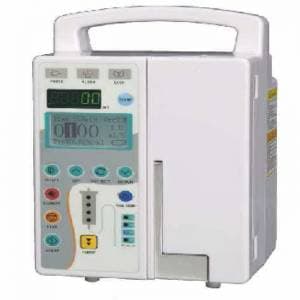
Volumetric infusion pump for controlled delivery of fluids, antibiotics and nutrition, with occlusion and air-in-line alarms.
Available to buy
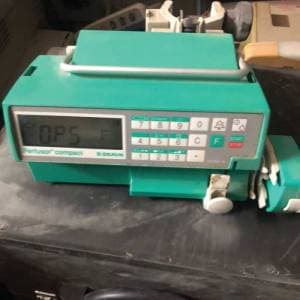
Precision syringe driver for low-volume, high-accuracy delivery of sedatives, analgesics, inotropes and insulin.
Not on the rental fleet
This item is supplied for purchase. If you need something similar on rent, call us — we will tell you what the rental fleet can do instead.
Available
Outright purchase including delivery, installation and a one-year warranty on manufacturing defects.
Get the best quote for this equipment
We price against what you actually need — how long, which configuration, whether nursing goes with it — rather than publishing a number that fits nobody. Ask and we will give you a straight one, GST stated separately.
Quotes state GST separately at the applicable rate. Rental and purchase are taxed differently.
A syringe pump advances the plunger of a standard syringe at a controlled rate, delivering volumes as small as fractions of a millilitre an hour. That precision is needed for drugs where the difference between a therapeutic and a dangerous dose is small — sedatives, opioids, inotropes, insulin. The flip side is that the same precision executes an error exactly as faithfully: a misplaced decimal delivers ten times the intended dose without hesitation. Rate checking against a written prescription is not bureaucracy here, it is the safety mechanism.
Which brand you receive depends on current stock. Tell us if you need a specific one and we will confirm before dispatch.
| Rate range | 0.1–1500 ml/hour depending on syringe size |
|---|---|
| Accuracy | ±2% typical |
| Syringe sizes | 5, 10, 20, 30 and 50 ml |
| Alarms | Occlusion, near-empty, end of infusion, low battery |
| Bolus | Programmable with configurable limits |
| Battery | Approximately 6–8 hours |
| Length | 125 mm |
|---|---|
| Width | 310 mm |
| Height | 115 mm |
| Weight | Approximately 2 kg |
The things that are easy to find out too late.
Sale only
Not carried on the rental fleet.
Decimal errors are the danger
The pump delivers exactly what it is told. With sedatives, opioids, inotropes or insulin, a tenfold rate error can be fatal — which is why the rate is checked against a written prescription every time it is set.
Syringe brand affects accuracy
The pump is calibrated against specific syringe dimensions. Substituting a different brand changes delivered volume; use what the pump is set for.
Occlusion alarms can lag
At very low rates, pressure builds slowly and an occlusion may take a long time to alarm. The line and site still need visual checks.
Device information, not medical advice. Suitability for a particular patient is a decision for the treating clinician.
Mounted on a stand or rail at the bedside. The technician loads the giving set or syringe, primes the line to clear air, enters the rate and volume limits the treating clinician has specified, and demonstrates the occlusion and end-of-infusion alarms before leaving.
Infusion rate, volume limits and the drug or fluid to be delivered must come from the treating clinician in writing. A trained nurse must be available to load and change the infusion — this is not a device a family sets up alone.
Giving sets and syringes are single-use consumables and must be changed on the clinician's schedule. Insertion sites are checked for swelling, coolness or pain at every shift.
Life-threatening, permanently damaging, or requiring hospitalisation.
Classified Class C (moderate–high risk) under India's Medical Devices Rules, 2017. CDSCO does not license rental or resale providers and Encone Care claims no CDSCO approval.
We deliver across Delhi NCR only. Check your pincode, or call us and we will tell you honestly whether we can reach you.
Items usually needed alongside this one — chosen because they solve an adjacent problem, not because they cost more.
Volumetric infusion pump for controlled delivery of fluids, antibiotics and nutrition, with occlusion and air-in-line alarms.
Available to buy
A commissioned home critical-care package — ICU bed, air mattress, patient monitor, oxygen source and suction — installed and configured together in one visit.
Available on rent or to buy
Multi-parameter bedside monitor covering ECG, SpO₂, non-invasive blood pressure, respiration and temperature, with alarm limits configured at installation.
Available on rent or to buy